A training video is only useful when the audience can follow it.
Subtitles and closed captions support different needs, and many companies benefit from both.
What is the difference?
Subtitles usually provide the spoken content as text, often translated into another language. They generally assume the viewer can hear the audio.
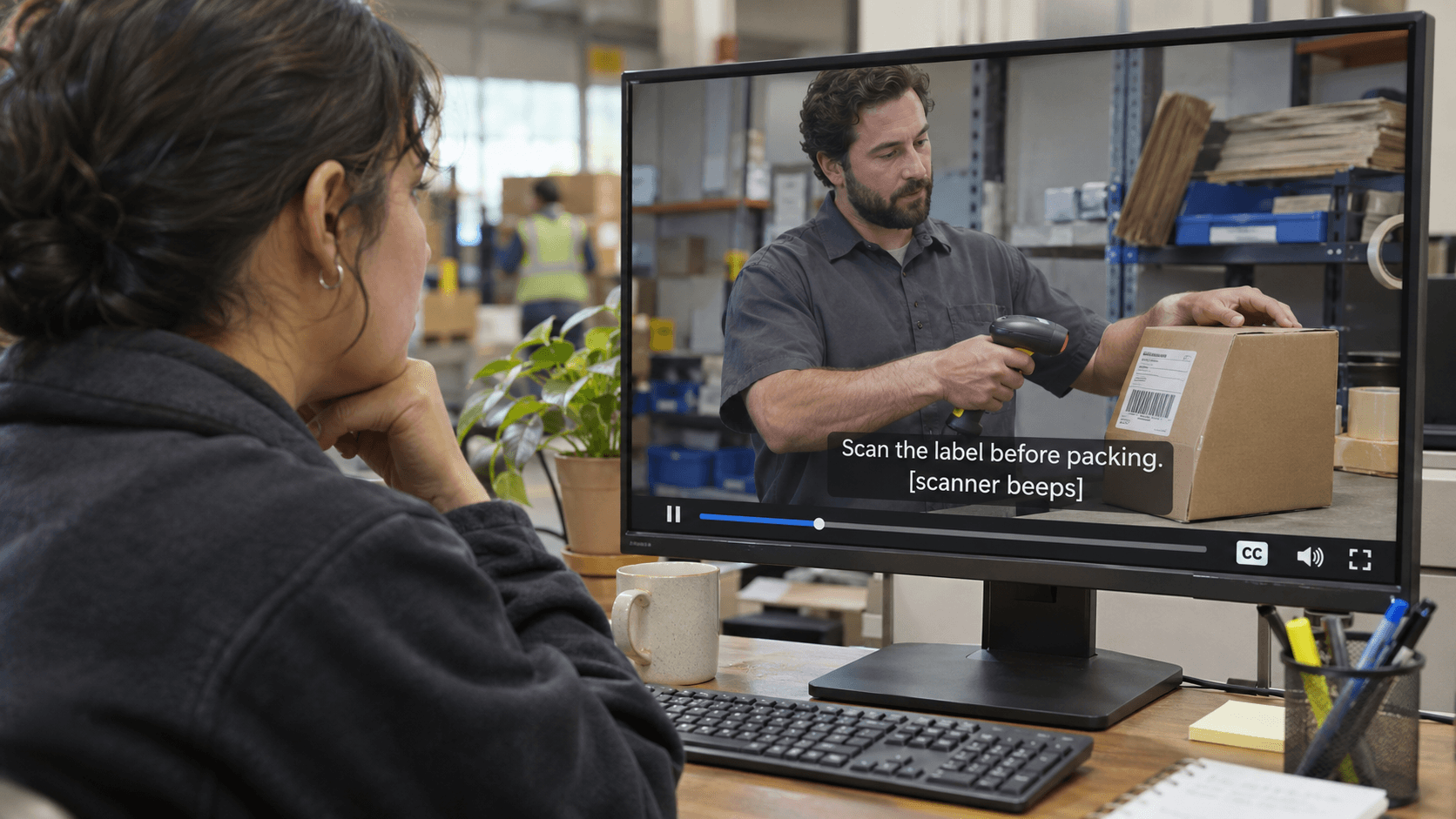
Closed captions include spoken dialogue plus relevant non-speech information, such as speaker identification, alarms, or other sounds. They support viewers who are deaf or hard of hearing and anyone watching without usable audio.
Why captions help at work
Employees may watch training in a loud break room, on a production floor, or on a device with the sound off. Non-native speakers may understand spoken content more easily when they can read along. Captions also make video content more flexible across devices and settings.
Accuracy matters
Automated captioning can save time, but it often struggles with names, numbers, accents, and industry-specific terminology. Safety and compliance content should be professionally reviewed and timed so the text is easy to follow.
Legal and accessibility requirements vary by organization and context. Employers should confirm specific obligations with qualified counsel rather than treating captions as a one-size-fits-all compliance answer.
A company can add multiple subtitle languages to one video and combine them with accurate captions in the original language.
Workplace Languages can translate, subtitle, caption, and review corporate training video so the material reaches more of the workforce.