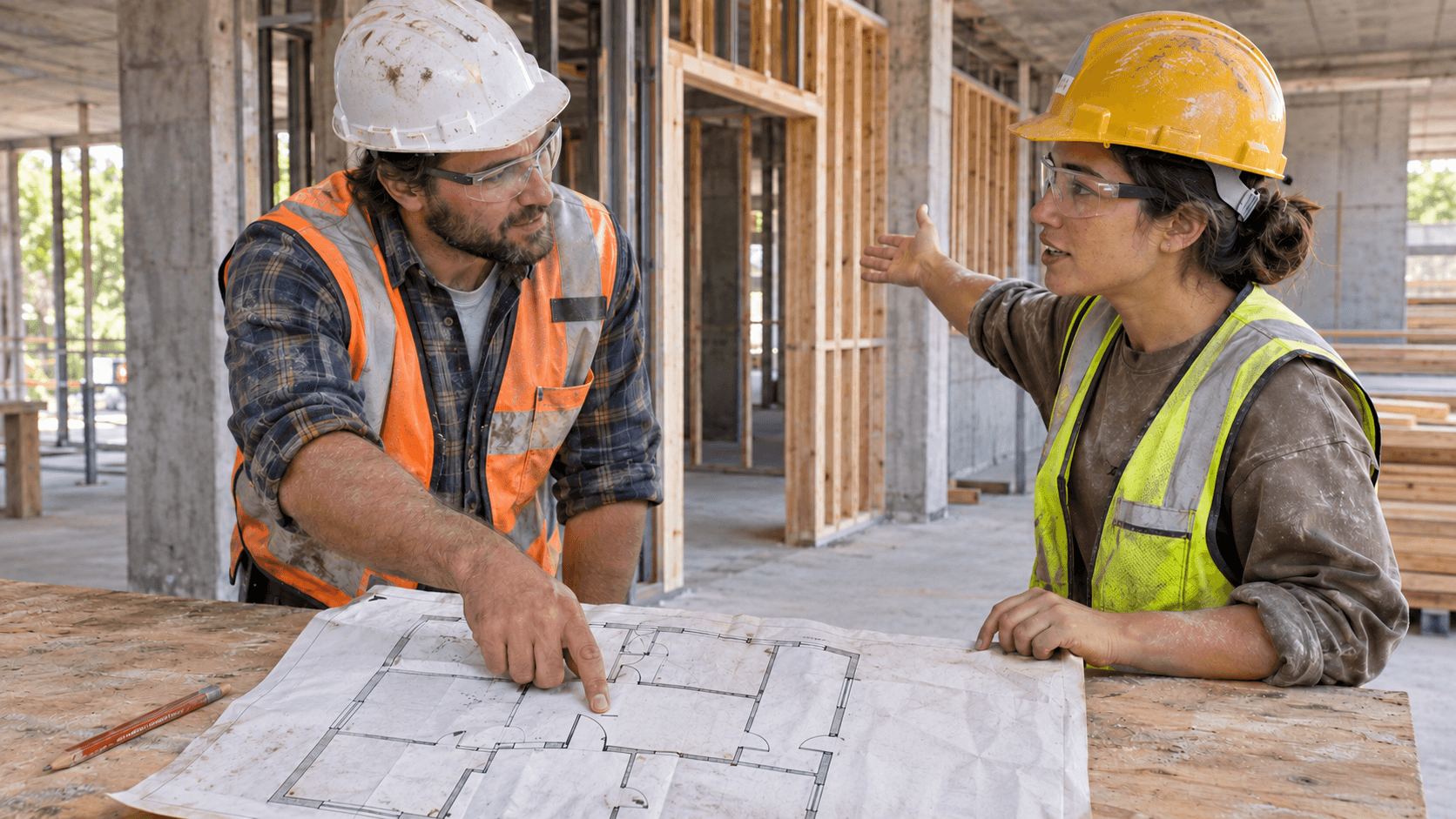
Construction communication has to work in real time.
A warning, radio call, equipment direction, or change in the task may require an immediate response. Long explanations and generic classroom vocabulary do not match that environment.
Focus on the language of safety and the trade
Jobsite English training should be built around the crew's actual work. Topics may include:
- Hazard warnings, PPE, signage, and emergency language.
- Equipment and trade-specific terms.
- Daily briefings, schedules, and task assignments.
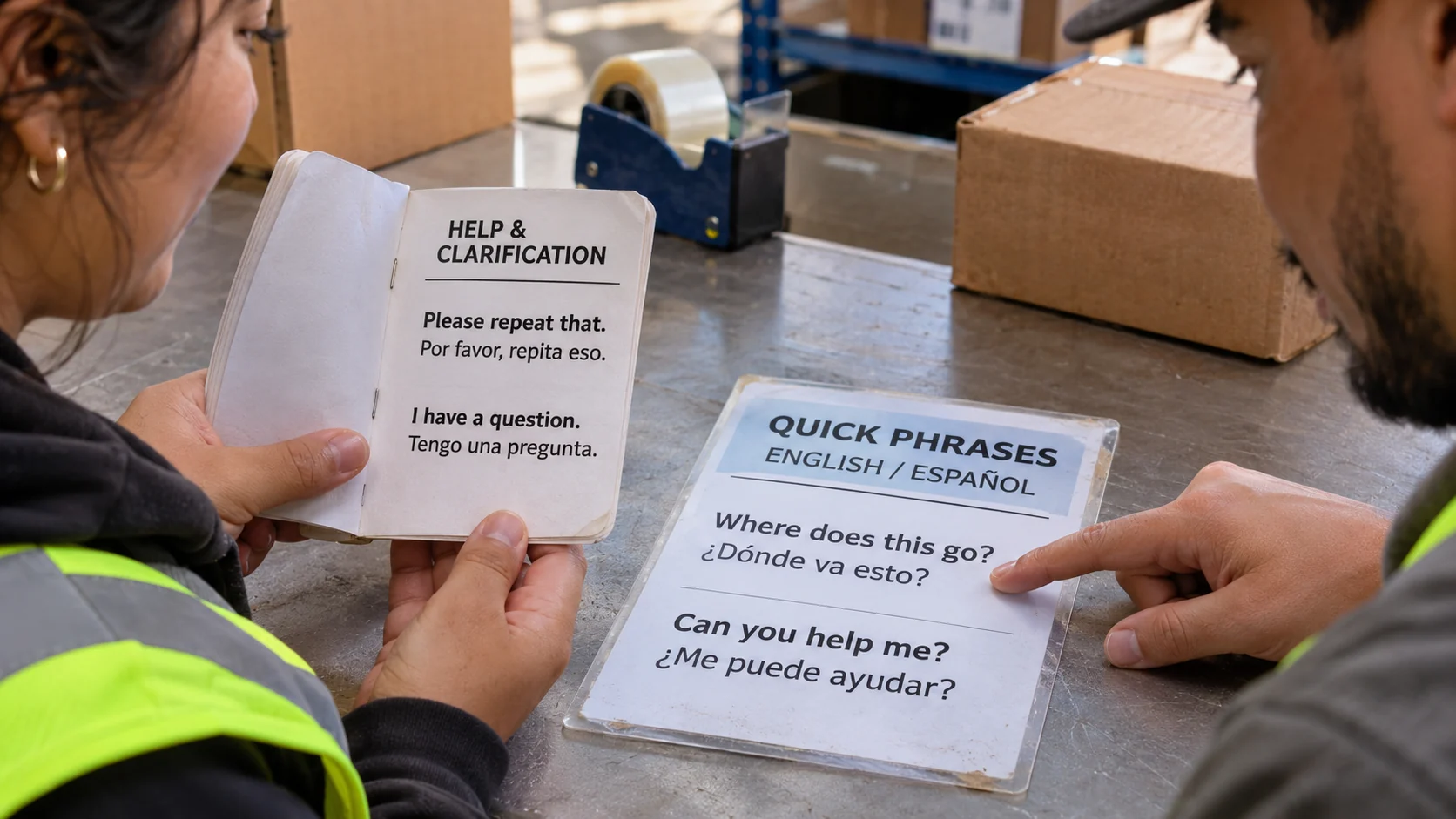
- Asking for clarification and confirming an instruction.
- Incident and near-miss reporting.
- The plain-language version of required safety content.
The training should coordinate with the company's safety team. Language instruction supports the safety program; it does not replace the organization's established procedures or regulatory responsibilities.
Use a schedule the crew can attend
Crews move between locations, work variable hours, and cannot always leave the jobsite. Short onsite sessions, lunchtime training, or live online classes for supervisors may be more practical than a traditional long course.
Pocket guides, bilingual cheat sheets, and short audio resources can reinforce the phrases employees use most often. Those tools are helpful between classes, but employees still need real opportunities to practice and show comprehension.
Train supervisors too
Clear, respectful language from the supervisor matters. Short sentences, demonstrations, and asking an employee to explain the next step are more useful than simply asking, "Do you understand?" Workplace Spanish for supervisors can also close part of the gap while employees continue building English.
Workplace Languages can develop a safety-focused program around the trades, locations, and schedules of your crews.