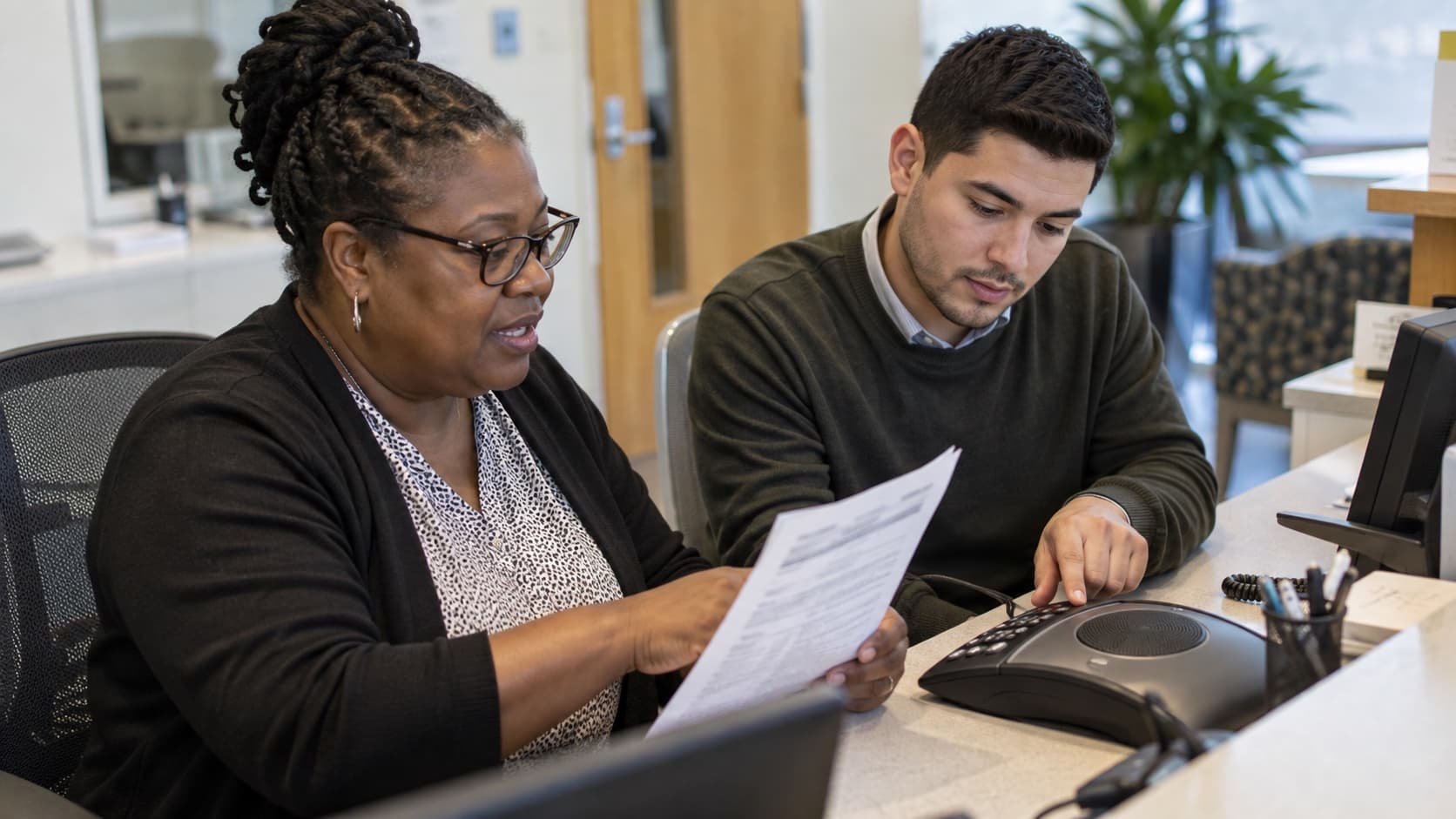
You have someone on the phone who needs help, and you don't share a language. What does your employee do next?
That's the question I would answer before putting an interpretation service in place. The service matters, of course. So does whether the person taking the call knows how to use it.
Over-the-phone interpretation, or OPI, brings a professional interpreter into a live conversation. It can support an employee asking a question, a customer explaining a problem, or a team coordinating work across languages.
Here are the questions I'd work through with the people who will use it.
Where do we find the connection instructions
Put them where staff will look during a call. That might be a service desk reference sheet or an internal page. Include the access information for your account and the steps for bringing the other person into the conversation.
Don't assume that sending an email once is enough. Have someone who didn't set up the account try to follow the instructions. If they get stuck, you have found something worth fixing.
What should we tell the interpreter
Give a brief introduction and explain the purpose of the conversation. Mention any relevant context or company terminology. Confirm the language needed and make sure everyone can hear clearly.
A quiet location helps. If you are using a shared phone, check the audio from where people will actually sit. A connection that works well at one desk may be hard to hear across a busy room.
How do we speak during the call
Speak directly to the person you're helping. Use a natural pace and leave pauses so the interpreter can convey the message. Take turns, and give the other person time to respond.
If something isn't clear, ask for clarification. Repeating the same sentence faster won't make the exchange easier. Neither will several people speaking at once.
When might phone interpretation be the wrong fit
Think about what the conversation requires. If someone needs to see a demonstration, use sign language, or rely on visual information, discuss video or onsite interpretation instead. Participant needs, privacy, the subject, and the setting should guide the choice.
Agree on what staff should do if the phone connection fails or the format isn't working. They need a next step, not an instruction to keep trying indefinitely.
Does this replace language classes or translated documents
Each helps in a different situation. Spanish or English classes build an employee's own ability over time. Written translation makes a document available in another language. OPI supports the live exchange when people need to speak and ask questions now.
A company may need all three. A translated onboarding document can be useful before a conversation, and an interpreter can help with the questions it raises.
Workplace Languages offers OPI as part of our language services. Tell us what kinds of conversations your staff handle, which languages they need, and where those conversations happen. We can help you work out a practical setup before the next call comes in.